Trying to choose between PRP and a hair transplant can feel a little weird.
On one hand, PRP sounds simple. No surgery. No grafts. No big recovery. Just your own blood, processed and injected into the scalp to help support healthier hair growth.
On the other hand, a hair transplant sounds more direct. Hair has already left the building, so to speak, and you want it back.
So which one is right?
Here’s the thing: PRP and hair transplants are not really fighting for the same job. PRP is usually better for maintaining and strengthening thinning hair. A hair transplant is better for restoring hair in areas where follicles are already gone or too weak to grow meaningful coverage.
That difference matters. A lot.
Quick Answer: PRP Maintains, Hair Transplants Restore
If you remember nothing else from this article, remember this:
PRP helps weak hair perform better. A hair transplant moves healthy hair into areas that need coverage.
That’s the cleanest way to think about PRP vs hair transplant.
PRP may help if you still have active follicles in the thinning area. It can improve hair thickness, support growth, and slow visible shedding for some patients. The American Academy of Dermatology notes that PRP may help stimulate hair growth in some people with hair loss, although results vary by patient. (ISHRS)
A hair transplant is different. It takes hair from the donor area, usually the back or sides of the scalp, and places it where hair is thinning or missing. The International Society of Hair Restoration Surgery explains that modern hair transplant surgery uses natural follicular units, which usually contain 1 to 4 hairs. (ISHRS)
In plain English: PRP is more like feeding the lawn. A hair transplant is more like replacing the bare patches with healthy grass from another part of the yard.
Not a perfect analogy, but close enough.
What Is PRP for Hair Loss?
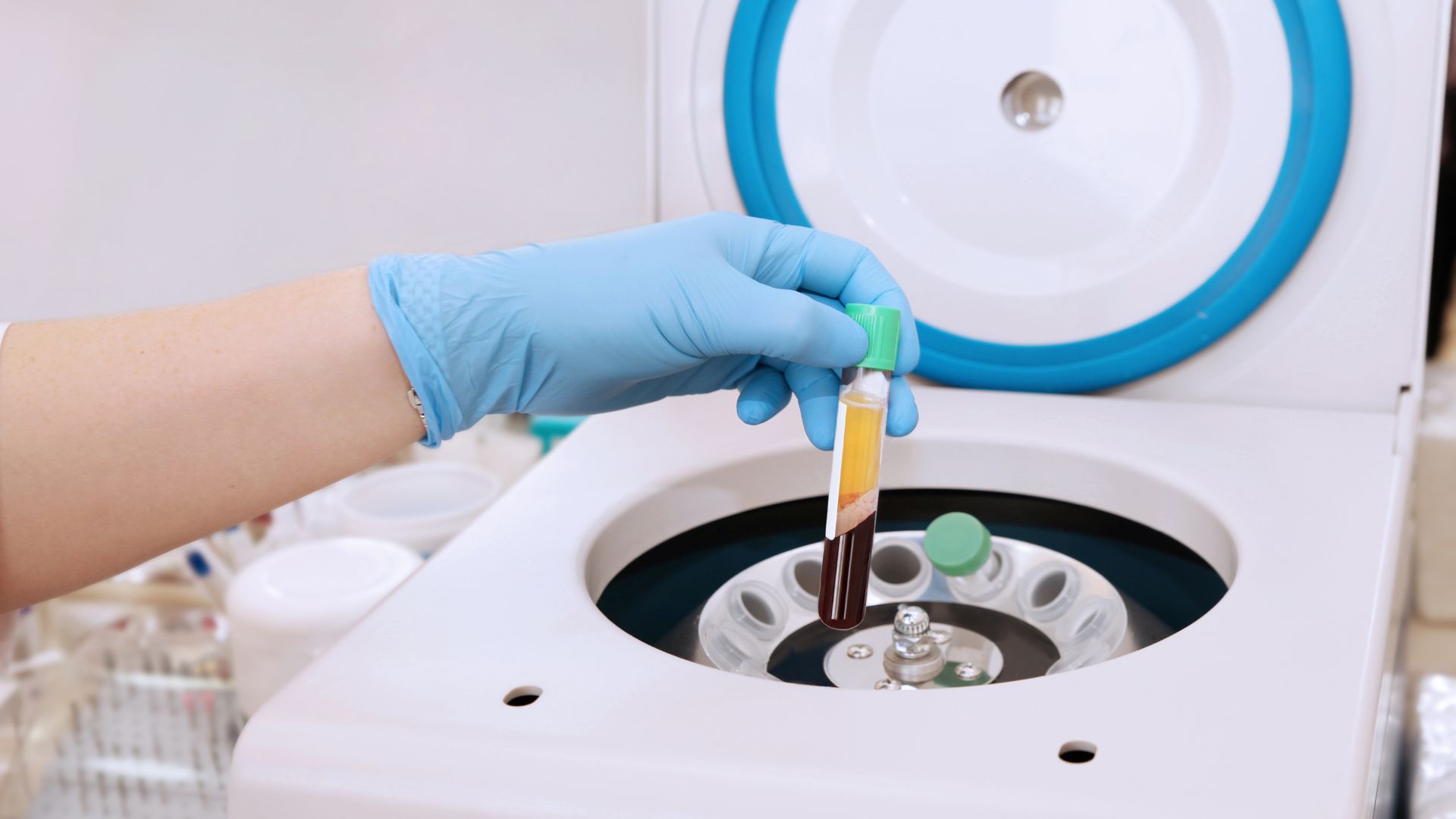
PRP stands for platelet rich plasma. It starts with a small blood draw. That blood is spun in a centrifuge to separate the plasma, which contains platelets and growth factors. Then that plasma is injected into targeted areas of the scalp.
Sounds a little sci fi, right? But the idea is simple.
The goal is to support hair follicles that are still alive but struggling. Think early thinning, weaker density, or shedding that has not turned into a slick bald spot.
PRP for hair loss may be a good fit if:
- You still have hair in the thinning area.
- Your hair part is getting wider.
- Your crown is starting to show more scalp.
- You want a non surgical treatment first.
- You are trying to maintain what you have.
- You are not ready for surgery.
PRP is not magic, though. Honestly, this is where a lot of people get disappointed. PRP cannot create hair follicles where none exist. If the area is already bald and smooth, PRP probably will not give you the kind of coverage you want.
It can help the right patient. It can be a waste of money for the wrong one.
That’s why the stage of hair loss matters more than the buzz around the treatment.
What Is a Hair Transplant?
A hair transplant is a surgical procedure that moves healthy hair follicles from the donor area to thinning or bald areas.
The donor area usually sits along the back and sides of the scalp. Those hairs are often more resistant to pattern hair loss, which is why they can be moved and still keep growing.
There are two main harvesting methods: FUE hair transplant and FUT hair transplant.
FUE Hair Transplant: Tiny Extractions, No Linear Scar
With FUE, follicular units are removed one by one using a small punch tool. The ISHRS describes FUE as a method that extracts individual follicular units from the donor area, often using micro punches. (ISHRS)
The big appeal is that FUE does not leave a linear scar. Instead, it leaves tiny dot scars that are often hard to see once healed, especially if the work is done carefully and the patient keeps enough hair length.
FUE may make sense if you like shorter hairstyles, need a smaller to moderate graft session, or want to avoid a strip incision.
FUT Hair Transplant: Strip Method, Strong Graft Yield
With FUT, a thin strip of hair bearing scalp is removed from the donor area. The strip is then carefully dissected under magnification into follicular unit grafts.
FUT does leave a linear scar, but it can be a strong option for patients who need a larger number of grafts or want to preserve donor resources for long term planning. Dr. Keene’s clinic describes FUT as a method where the donor ellipse is dissected into tiny 1 to 4 hair follicular unit grafts, with closure techniques used to help camouflage the scar. (Hair Restore)
So yes, FUT sounds more old school. But old school does not mean outdated. For the right patient, FUT can still be a smart surgical choice.
PRP vs Hair Transplant: How They Compare
Let’s make this less foggy.
If Your Hair Is Thinning, PRP May Be Enough
If you are catching hair loss early, PRP may help you hold the line.
Maybe your crown is thinner under bright bathroom lights. Maybe your hairline is not gone, but it looks softer than it used to. Maybe your ponytail feels smaller. These are the cases where PRP may deserve a serious look.
PRP is often used as a maintenance treatment. That means it may require a series of sessions, then follow up treatments over time. It is not usually a one and done situation.
That part matters for budget. A lower upfront cost may become a long term expense.
If the Hair Is Gone, Surgery Usually Makes More Sense
Here’s the harder truth: once an area has lost too many follicles, PRP has very little to work with.
A hair transplant is usually the stronger option when you need visible coverage in a bald or clearly recessed area. This is especially true for:
- Receded temples
- A defined bald crown
- A thin frontal hairline
- Advanced male pattern hair loss
- Cosmetic gaps that bother you every day
A transplant is more involved, yes. It costs more upfront. There is healing time. There is planning. There is patience, too, because final growth takes months.
But if your goal is actual restoration, not just maintenance, surgery may be the better tool.
Let’s Talk Budget Without Making It Awkward
Money is part of the decision. No need to dance around it.
PRP usually costs less per visit than a hair transplant, but it requires repeat treatments. Hair transplants cost more upfront, but the transplanted follicles are intended to keep growing long term when they come from a stable donor area.
So the budget question is not only, “What costs less today?”
It is also, “What am I trying to accomplish?”
If you are maintaining early thinning, PRP may be the more reasonable first step. If you are trying to rebuild a hairline, paying for years of PRP may not get you where you want to go.
That is not a fun surprise. Better to know now.
What About Downtime?
PRP has minimal downtime. Most people return to normal routines quickly, though the scalp may feel sore or tender for a short time.
A hair transplant requires more planning. You will have tiny recipient sites where grafts are placed, and the donor area also needs time to heal. With FUT, there is a linear incision. With FUE, there are many small extraction sites.
You also have to think about the social side of recovery. Not medical, just real life.
Can you wear a hat when allowed? Can you work from home for a few days? Do you have a wedding, vacation, or big client meeting coming up?
Hair restoration is medical, but it is also personal. You still have to live your life while your scalp heals.
So, Which One Sounds Like You?
Let’s do the mirror test.
You May Be a Better Fit for PRP If…
- Your hair loss is early.
- You still see hair in the thinning area.
- You want to slow shedding or improve thickness.
- You are not ready for surgery.
- You can commit to maintenance.
- You are looking for a subtle improvement, not a brand new hairline.
PRP can be a great “let’s preserve this” option.
You May Be a Better Fit for a Hair Transplant If…
Your hairline has clearly receded.
Your crown has a bald spot.
You want visible coverage.
You have enough healthy donor hair.
You want a longer term surgical correction.
You understand that results take time.
A FUE hair transplant or FUT hair transplant may be a better fit if the goal is to move hair into areas where natural growth is no longer doing the job.
You May Need Both If…
You have some areas that need restoration and other areas that need support.
This is common. Very common, actually.
A patient may use surgery to rebuild the hairline, then use PRP to support existing thinning hair nearby. Or PRP may be recommended before or after surgery to support scalp health and help maintain non transplanted hair.
It is not always PRP or transplant. Sometimes the answer is PRP and transplant, just in the right order.
The Big Mistake: Choosing the Treatment Before the Diagnosis
This happens all the time.
Someone reads about PRP and thinks, “Great, no surgery.” Someone else sees before and after transplant photos and thinks, “That’s what I need.”
Maybe. Maybe not.
Hair loss needs proper diagnosis first. Pattern, donor density, age, family history, hair caliber, scalp condition, medication history, future loss risk, all of it matters. It is less like ordering from a menu and more like creating a building plan. You need the foundation checked before anyone starts swinging a hammer.
Dr. Keene’s approach places strong emphasis on planning around donor supply, future hair loss, and natural looking density, rather than simply chasing the highest graft count. (Hair Restore)
That kind of planning matters because donor hair is limited. Once it is used, it is used.
PRP vs Hair Transplant: The Bottom Line
PRP is usually better for early thinning and maintenance.
A hair transplant is usually better for visible restoration in areas where hair has already been lost.
FUE may be preferred when avoiding a linear scar is important. FUT may be preferred when a larger graft yield or long term donor planning is the priority. And in many cases, PRP can support the bigger plan rather than compete with it.
You know what? The right answer is not always the flashiest treatment. It is the treatment that matches your stage of hair loss, your budget, your goals, and your future.
If you are stuck between PRP and a hair transplant, schedule a consultation with Dr. Keene. A proper evaluation can show what is still salvageable, what needs restoration, and what plan makes the most sense for the long haul.