
Physician’s Hair Institute in Tucson, Arizona offers a full spectrum of hair loss treatments for men and women; from physician-supervised medical therapy and non-surgical regenerative treatments to surgical hair restoration. All treatment plans are developed and overseen personally by Dr. Sharon Keene, MD, a female, dual board-certified hair restoration surgeon and Past President of the International Society of Hair Restoration Surgery (ISHRS).
Whether you are in the early stages of hair loss and exploring non-surgical options, managing an ongoing condition with medication, or evaluating whether surgical restoration is right for you, Dr. Keene will assess your individual situation and recommend a treatment plan tailored to your hair loss pattern, goals, and timeline. Virtual consultations are available for patients in Scottsdale, Phoenix, and across Arizona.
Hair Loss Treatment Options at PHI
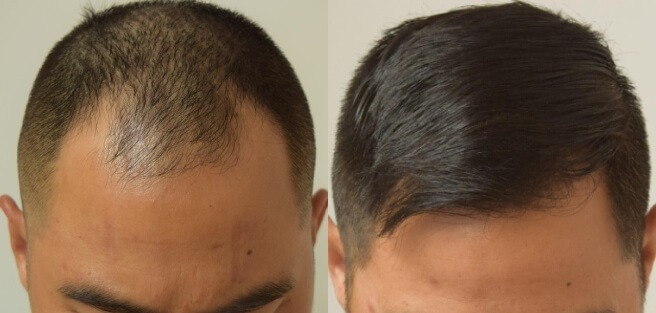
PHI offers treatment options across three categories; non-surgical regenerative treatments, physician-supervised medical therapy, and surgical hair restoration. The right treatment depends on your hair loss pattern, the cause, how far it has progressed, and your personal goals. Dr. Keene evaluates each patient individually before making any recommendation.
Non-Surgical Regenerative Treatments
PRP uses growth factors from your own blood to stimulate follicle activity and slow the progression of hair loss. Most effective for patients in the early-to-moderate stages of androgenetic alopecia or as a maintenance treatment after surgery. Treatments are typically performed every 3 to 6 months.
Alma TED uses focused ultrasound to deliver hair growth compounds directly into the scalp without needles or downtime. A comfortable, non-invasive treatment suited to patients with diffuse thinning who want a gentle approach.
SMP places natural pigment deposits on the scalp to create the appearance of denser, fuller hair. Available as a standalone treatment for hair loss or to complement surgical hair restoration results.
Physician-Supervised Medical Therapy
An FDA-approved oral medication that works by blocking the enzyme that converts Testosterone into Dihydrotestosterone (DHT) – the hormone responsible for male pattern hair loss. Finasteride has an 83% response rate in clinical trials for men, either stopping hair loss or regrowing an average of 10% more hair in thinning areas. Prescribed and monitored by Dr. Keene.
The only other FDA-approved medication for hair loss. Available over the counter, but Dr. Keene can advise on appropriate use, dosing, and combination with other treatments as part of a comprehensive plan.
Laser therapy devices cleared by the FDA for use in hair loss. Dr. Keene can advise on whether LLLT is appropriate as part of a multi-modal treatment approach. Discuss during consultation.
Surgical Hair Restoration
Medication-Based Hair Loss Treatment
Dr. Sharon Keene, MD prescribes and recommends only FDA-approved medications for the treatment of hair loss. She evaluates each patient individually before recommending medical therapy; taking into account the cause of hair loss, the patient’s overall health, and any medications or conditions that would affect suitability.
Medication like Finasteride works by blocking the enzyme that converts the male hormone Testosterone into its metabolic byproduct, Dihydrotesterone (DHT). In the case of male pattern baldness, DHT is the messenger hormone that directs the hair follicle to stop making hair. Therefore, blocking the formation of DHT has been found to help stabilize hair loss, and to regrow some hair in affected men. Although DHT is felt to be important in a developing male fetus, researchers do not feel it maintains any important beneficial functions in adult males.
The results of two year-long medical trials studying the effects of Propecia in male pattern baldness revealed a greater than 83% response rate in study participants who either maintained their hair pattern and stopped losing hair, or 66% regrew an average of 10% more hair in an area of thinning hair. The medication was not felt to be effective for certain patterns such as temporal recession (hairline). It would not be expected to regrow hair in an area where an absolute loss of follicles had previously occurred.
Who Benefits from Non-Surgical Hair Loss Treatment?


Non-surgical hair loss treatments are appropriate for a wide range of patients; and are often the right starting point even for patients who may eventually pursue surgery.
Non-surgical treatment may be the right fit if you:
- Are in the early stages of hair loss and want to slow progression before considering surgery
- Have diffuse thinning that does not yet meet surgical candidacy criteria
- Prefer to avoid surgery and are looking for effective alternatives
- Have completed hair transplant surgery and want to support the health of remaining native hair
- Are experiencing hormonal-related hair loss (postpartum, perimenopause) that may be temporary or reversible
- Have a medical condition or medication that affects hair loss and want physician guidance on appropriate treatment
Non-surgical treatments can also be used in combination with each other and with surgical procedures. Dr. Keene will advise on the right sequence and combination based on your individual case.
When to consider surgical hair restoration instead:
If your hair loss has stabilized, you have a defined pattern of loss, and you have sufficient donor density at the back and sides of the scalp, hair transplant surgery may produce more significant results than non-surgical treatments alone. Dr. Keene will assess surgical candidacy during your consultation and will tell you honestly if surgery is not the right fit.
Serving Patients from Scottsdale, Phoenix, and Across Arizona
Physician’s Hair Institute is located in Tucson and serves patients from across Arizona, including Scottsdale, Phoenix, Tempe, and Mesa. For patients outside Tucson, Dr. Keene offers virtual consultations to discuss hair loss concerns, review your pattern and history, and determine which treatment options are most appropriate, before you make the trip south.
Non-surgical treatments including PRP, Alma TED, and medical management can often be coordinated with a single in-person visit to our Tucson clinic. To schedule a virtual consultation, call (520) 290-5555 or book online.

FAQs About Hair Loss Treatments
There is no single most effective treatment for all patients — the right approach depends on the cause, pattern, and stage of hair loss. For male pattern hair loss (androgenetic alopecia), FDA-approved medications like Finasteride and Minoxidil have the strongest clinical evidence for slowing progression. PRP therapy and Alma TED are effective non-surgical options for patients who want to support follicle health without medication. For patients with significant, stable hair loss and sufficient donor density, surgical hair restoration produces the most lasting results. Dr. Keene evaluates each patient individually and recommends based on their specific case.
Yes. Dr. Keene prescribes and monitors FDA-approved hair loss medications, including Finasteride for men and physician-appropriate options for women. She evaluates each patient’s overall health, the cause of their hair loss, and any other medications or conditions before prescribing. Dr. Keene does not recommend non-FDA-approved or over-the-counter remedies that have not been through rigorous clinical testing.
PRP (platelet-rich plasma) therapy involves drawing a small amount of the patient’s blood, concentrating the platelet-rich portion, and injecting it into areas of thinning. The growth factors in the platelets stimulate follicle activity and can slow the progression of hair loss. PRP works best for patients in the early-to-moderate stages of androgenetic alopecia. It is not a replacement for surgery in patients with significant loss, but is an effective option for maintaining density and supporting follicle health over time.
Alma TED uses focused ultrasound energy to deliver hair growth compounds into the scalp without any injections; there are no needles and no downtime. PRP uses the patient’s own blood-derived growth factors and does involve injection. Both treatments aim to support follicle health and slow hair loss progression. Alma TED is particularly suited to patients who prefer a completely non-invasive approach or who are not comfortable with injections. Dr. Keene can advise on which is more appropriate during consultation.
Finasteride is FDA-approved for use in men only. It is not approved for women and is contraindicated in women who are pregnant or may become pregnant due to the risk of harm to a male fetus. However, there are other physician-prescribed treatment options available for women with androgenetic alopecia or other forms of hair loss. Dr. Keene will advise on appropriate options for female patients during consultation.
Timeline varies by treatment. Finasteride typically takes 3 to 6 months of consistent use before results are noticeable, and full results are evaluated at 12 months. Minoxidil has a similar timeline. PRP results are typically assessed after 3 sessions (9 months). Alma TED results develop gradually over 3 to 6 months following a course of treatment. Non-surgical treatments require patience; the goal is to slow loss and support existing follicles, not to achieve instant regrowth.
No, virtual consultations are available. Dr. Keene offers virtual consultations for patients in Scottsdale, Phoenix, Tempe, Mesa, and across Arizona. A virtual consultation covers your hair loss history, pattern, current medications, and preliminary treatment recommendations. For some treatments (such as PRP or Alma TED), an in-person visit to our Tucson clinic is required. Dr. Keene will advise on what is needed after the virtual consultation.
Most hair loss treatments – including Finasteride, PRP, Alma TED, SMP, and surgical hair restoration – are considered elective cosmetic procedures and are not covered by standard health insurance plans. FDA-approved medications like generic Finasteride may be covered when prescribed for other conditions (such as benign prostatic hyperplasia), but coverage for hair loss specifically is rare. Dr. Keene’s team can provide documentation to support any insurance inquiry. Financing options may be available — discuss at consultation.
PHI is led by Dr. Sharon Keene, MD – dual board-certified by the American Board of Surgery and the American Board of Hair Restoration Surgery, and a Past President of the International Society of Hair Restoration Surgery (ISHRS). Dr. Keene is a female surgeon who personally evaluates and treats every patient. PHI is not a chain clinic. Treatments are not delegated to technicians. Dr. Keene recommends only FDA-approved interventions and will tell you honestly if a treatment is unlikely to be effective for your specific situation.