Let’s be honest — the first thing most people Google after hearing about hair transplants is some version of “will it look fake?” And that’s a completely fair concern. Nobody wants to walk around with a hairline that screams “I had work done.” The good news? When it’s done right, a FUT (Follicular Unit Transplantation) hair transplant can look remarkably, almost eerily, natural. But — and this is a big but — the results depend on a lot of things working together in just the right way.
FUT has been around since the early 1990s, long enough to have a real track record. Surgeons remove a strip of scalp — typically from the back of the head, where hair follicles are genetically resistant to balding — and then dissect it into individual follicular units under a microscope. Those units get transplanted into the thinning or bald areas. The science is solid. The execution, though? That’s where things get interesting.
So, do FUT hair transplants look natural? Here’s everything you actually need to know.
What Makes a Hair Transplant Look Natural (or Not)
Here’s the thing — hair isn’t just hair. It grows in tiny clusters called follicular units, usually containing one to four hairs each. Nature doesn’t plant them randomly; they follow direction, density, and angle patterns that are specific to each person. When a surgeon ignores these patterns, even a technically “successful” transplant can end up looking off. Something just seems wrong, even if people can’t put their finger on why.
The biggest factors that determine whether a FUT result looks natural are:
Hairline design. A natural hairline isn’t a straight line — it’s irregular, slightly asymmetrical, and has what surgeons call a “feathered” edge. Single-hair follicular units are placed along the very front to mimic the way hair naturally thins out at the temple region. Experienced surgeons spend serious time mapping this before a single incision is made.
Angle and direction. Hair on the crown grows in a spiral. Hair at the temples grows forward. Hair on the sides grows downward. Each zone has its own unique growth pattern. If transplanted hairs grow in the wrong direction, the result can look stiff or unnatural — like a wig sitting slightly wrong on someone’s head.
Density distribution. You don’t need to replace every single lost hair to achieve a natural look. Surgeons strategically concentrate density where it matters most — usually the frontal zone — and gradually taper it further back. This mirrors how hair naturally appears denser up front and slightly less so toward the crown.
Think of it like a painter working on a portrait. The technical skill matters, but so does the artistic judgment — knowing where to put detail and where to suggest it. The best hair transplant surgeons are, in a real sense, artists who work with living tissue.
FUT specifically offers one significant advantage here: graft quality. Because the follicular units are dissected from a strip under magnification, the grafts tend to be more intact — less transection (accidental cutting of the follicle) compared to some other methods. Healthier grafts mean better survival rates, and better survival rates mean denser, more natural-looking results over time.
The Scar Question — Because Everyone’s Thinking It
You know what people almost always ask next? “But what about the scar?” It’s a legitimate worry. FUT does leave a linear scar at the donor site — that strip that gets removed from the back of the scalp. It’s real, it’s permanent, and pretending otherwise would be doing you a disservice.
But here’s the context that often gets left out of the conversation: for most people, the scar is completely invisible in everyday life. It sits low on the back of the head, well within the area covered by normal hair length — even relatively short styles. If you typically keep your hair at a number 3 or above on the clippers, you’re almost certainly fine. It’s only at very short buzz cuts — a number 1 or shaved — that the scar becomes visible.
The width and visibility of the scar also depend heavily on the surgeon’s technique. A skilled practitioner using trichophytic closure — a method where the wound edges are slightly overlapped before suturing — allows hair to grow directly through the scar, making it even less detectable. Some patients end up with scars so fine they genuinely have to look hard to find them.
Compare that to FUE (Follicular Unit Extraction), where individual follicles are punched out one by one, leaving dozens or hundreds of tiny round scars scattered across the donor area. For people who keep their hair very short, FUE scars can actually be more visible than a well-healed FUT scar. It’s one of those counterintuitive truths that surprises a lot of people researching their options.
The honest takeaway: if your lifestyle includes wearing your hair short — like, military short — FUT deserves real consideration before ruling it out. For everyone else, the scar is largely a non-issue.
What to Actually Expect — From Day One Through Year Two
Patience. That’s probably the hardest part of this whole process. People go into a FUT procedure expecting to look dramatically different by month two, and when they don’t — when they’re actually shedding the transplanted hairs — it can feel alarming. Let me explain what’s actually happening.
The first few weeks after a FUT transplant, the scalp is healing. There’s redness, some scabbing around the grafts, and the new hairs might look a bit stubby and sparse. Around weeks two to four, most of the transplanted hairs fall out. This is called “shock loss” and it’s completely normal — the follicle itself stays in place and is very much alive; it just sheds the hair shaft as part of the trauma response. First-timers often panic at this stage. Don’t.
Around months three to four, the new growth starts coming in. It’s fine, sometimes a little wispy, and the texture might feel different at first. By month six, you’re starting to see real results — actual density, actual coverage. But the final result? That’s typically around the twelve to eighteen month mark. Some people see continued improvement all the way out to two years.
This timeline matters for a practical reason: if you’re planning around a major life event — a wedding, a big professional milestone — give yourself at least a year of buffer. The results are worth waiting for, but they don’t arrive on a convenient schedule.
There’s also the question of existing hair. FUT works alongside whatever native hair you still have, and sometimes the procedure itself (plus the anaesthesia and general stress on the scalp) can cause some temporary shedding of pre-existing hairs nearby. This is usually temporary — those hairs grow back within a few months. But it’s worth knowing about so you’re not caught off guard.
Once the transplanted hairs are fully established, they behave just like regular hair. You can cut them, style them, wash them, and yes — they can even go grey as you age. They’re your hairs, just moved. That’s part of what makes FUT results so naturally convincing over the long haul.
Choosing the Right Surgeon Makes All the Difference
This might be the most important part of this entire article. More than the technique, more than the technology — the surgeon’s skill and aesthetic judgment is the single biggest determinant of whether your result looks natural or not.
Hair transplantation sits in an interesting zone: it’s a medical procedure, but the outcome is judged on aesthetic grounds. You need someone who is technically precise AND has a good eye. These two things don’t always come packaged together. A surgeon might perform a flawless FUT procedure from a medical standpoint — clean extraction, good graft survival — but design a hairline that looks slightly “off” to anyone who looks closely.
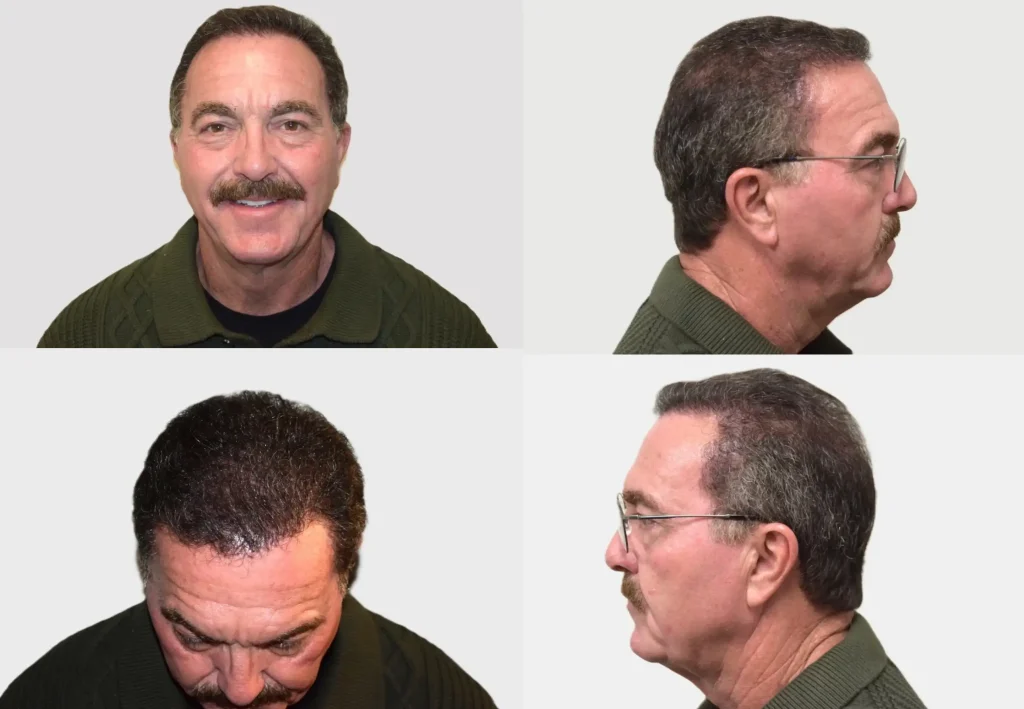
When researching clinics, look for board certification in dermatology or plastic surgery with a dedicated subspecialty focus on hair restoration. Organizations like the International Society of Hair Restoration Surgery (ISHRS) maintain directories of vetted practitioners. Before-and-after photo galleries are essential — and not just the dramatic transformations. Look at the hairlines. Look at the temples. Look at cases that match your specific pattern of loss. Do the results look like real hair or like a grid?
Honestly, one red flag to watch for: clinics that primarily push high graft numbers in their marketing. “4,000 grafts!” sounds impressive, but more isn’t always better. Overharvesting the donor area can actually thin it out noticeably, which creates a whole different problem. A good surgeon recommends the number of grafts you actually need — not the number that looks impressive on a brochure.
Consultations are your friend. Most reputable clinics offer them, and many are now available virtually. Use them. Ask about their hairline design philosophy. Ask to see cases similar to yours. Ask who specifically will be performing the procedure — in some clinics, technicians handle most of the work while the surgeon merely supervises. Knowing exactly who is doing what matters.
There’s a saying in the hair restoration community: “You pay for the surgeon’s hands and their eyes.” That framing gets at something real. The strip can be harvested, the grafts can be dissected — those are skills that can be taught. But knowing exactly where to place each graft, at what angle, at what depth, with what density distribution across a unique individual’s scalp — that’s judgment built over years of doing nothing but this.
So — do FUT hair transplants look natural? The short answer is yes, absolutely, when everything comes together correctly. The longer answer is that “natural” is less about the technique itself and more about the combination of healthy grafts, thoughtful design, appropriate candidate selection, and a surgeon who genuinely understands hair as both biology and aesthetics. Get those elements right, and the result should be hair that looks like it was always there — because, in a very real sense, it was. It just needed a change of address.