
PHYSICIAN’S HAIR INSTITUTE · PATIENT EDUCATION
FUT vs. FUE Hair Transplant: Which Procedure Is Right for You?
FUT and FUE transplant your own hair follicles into thinning areas. FUT harvests a strip of donor scalp; FUE removes individual follicular units. FUT leaves a linear scar, while FUE leaves multiple small scars. The appropriate choice depends on donor supply, hair-length preferences, treatment goals, and an individual surgical assessment.
By Dr. Sharon Keene, MD · ABHRS Diplomate, ISHRS Past President · Physician’s Hair Institute, Tucson, Arizona


What Is FUT (Follicular Unit Transplantation)?
FUT, sometimes called the “strip method,” removes a single strip of scalp from the permanent donor zone at the back of the head. A surgical team then dissects that strip under microscope into individual follicular units – natural groupings of one to four hairs – before transplanting them into the recipient area. Because the strip is removed as one piece, FUT can typically yield a higher graft count in a single session than FUE, which is one reason surgeons often recommend it for patients covering a large area of baldness in one procedure. The donor incision is closed with sutures or staples, leaving one linear scar that is usually hidden by surrounding hair at a normal length (roughly half an inch or longer).
Explore the procedure in more detail: FUT hair transplantation.
What Is FUE (Follicular Unit Extraction)?
FUE harvests each follicular unit individually, using a small circular punch tool – often under one millimeter in diameter – rather than removing a strip. There’s no linear incision and no sutures; each extraction site heals on its own as a tiny dot roughly the width of the punch tool. That’s what gives FUE its reputation for less visible scarring, and it’s why FUE is often the better fit for patients who want the option to wear their hair very short, including buzz cuts. The tradeoff is time: because each follicle is removed one at a time, FUE sessions can take longer and may require more than one session to reach the graft count a single FUT session can deliver.
Explore the procedure in more detail: FUE hair transplantation.
FUT and FUE at a Glance
Compare the main tradeoffs side by side. Neither technique wins every row.
Factor
FUT (strip method)
FUE (follicular extraction)
Harvesting
FUT
A strip of scalp is removed and dissected into follicular-unit grafts.
FUE
Individual follicular units are removed using small circular incisions.
Scarring
FUT
One linear donor scar; visibility depends on healing, technique, and hairstyle.
FUE
Multiple small donor scars; not scar-free and not guaranteed invisible.
Early recovery
FUT
An incision requires protection while healing; instructions are individualized.
FUE
No linear incision; individual extraction sites still require aftercare.
Graft planning
FUT
May suit larger sessions when donor characteristics permit.
FUE
Session size depends on safe donor limits and the surgical plan.
Cost
FUT
Depends on graft count, complexity, and the clinic’s treatment plan.
FUE
May cost more per graft; compare personalized estimates, not assumptions.
Hair preferences
FUT
Discuss how much hair length is needed to conceal the donor scar.
FUE
May suit shorter styles, but very close shaving can expose donor changes.
Scarring: What Each Technique Actually Leaves Behind
This is the single biggest driver of which technique a patient chooses, and it’s worth being precise rather than relying on marketing shorthand. FUT leaves one linear scar, typically of a length determined by the surgical plan, in the donor zone. With a trichophytic closure technique, hair can often grow directly through the scar line, making it difficult to see at a normal hair length – but it will be visible if hair is worn very short (a number 2 clipper guard or shorter). FUE leaves dozens to hundreds of tiny, randomly scattered dot-scars across a wider donor area. Individually they’re harder to notice than one linear line, but at very short lengths or under bright, direct light, a trained eye can sometimes detect a slight texture change across the donor region. Neither technique is scar-free – the honest comparison is one visible line versus many nearly invisible dots.
Recovery Timeline Compared
FUE recovery is generally faster and less restrictive in the first one to two weeks: no sutures to remove, less donor-site discomfort, and a quicker return to light activity, often within three to five days. FUT recovery involves more donor-site tenderness for the first seven to ten days while the strip incision heals, and patients are typically asked to avoid strenuous exercise for two to three weeks to protect the suture line. Final results – meaning new hair growth in the recipient area – follow the same biological timeline for both techniques: initial shedding of transplanted hairs within two to four weeks (expected, not a complication), new growth beginning around month three to four, and results continuing to mature over the following months, with timing varying by patient.
Which Procedure Costs More?
Pricing for both techniques depends on the number of grafts needed, not a flat procedure fee, which is why “FUT vs. FUE cost” doesn’t have one universal answer – a small FUT session can cost less than a large FUE session, and vice versa. As a general pattern across the industry, FUE is often priced somewhat higher per graft because it is more labor- and time-intensive for the surgical team. The most reliable way to compare cost for your specific case is a consultation that includes a donor-area and goal assessment, since that’s what actually determines your graft count – and your graft count is what drives the price.
How Dr. Keene Decides Which Technique Fits Each Patient
Dr. Sharon Keene, MD – an ABHRS Diplomate and ISHRS Past President – doesn’t start from a default technique. The decision is based on the patient’s donor hair characteristics, the size of the area being treated, hair-wearing preferences (including whether the patient wants the option to wear hair very short), and how many grafts the goal realistically requires. Dr. Keene’s approach favors conservative, natural-density planning over pursuing a high graft count in a single sitting – a philosophy that sometimes means recommending a combination approach rather than treating FUT and FUE as mutually exclusive.
In practice, that evaluation typically looks at: the total donor supply available across the back and sides of the scalp; whether the area needing coverage is small and localized (often a good fit for either technique) or large (where FUT’s higher per-session yield matters more); and the patient’s longer-term hair-length preferences, since that affects how much scarring tradeoff is acceptable.


Can You Combine FUT and FUE?
Yes – and for patients who need a large number of grafts, a combined FUT/FUE approach is a legitimate option worth discussing, not a compromise. Combining techniques may increase the number of grafts available from the donor area in a single surgical day while still preserving donor-zone options for a future session, if one is ever needed.
For a closer look at how this works, see our guide to the FUT/FUE combination approach.
Choosing Between FUT and FUE
Neither FUT nor FUE is categorically better – they solve different problems. FUT typically delivers more grafts per session and can cost less for large cases; FUE leaves less visible scarring and suits patients who want the option to wear their hair short. The right answer depends on your donor supply, the area you’re treating, and how you want to wear your hair during recovery and beyond. The next step is a consultation where Dr. Keene can evaluate your specific case and recommend – honestly – which technique, or which combination, fits your goals.
Preparing for an Individualized Consultation
An article can narrow your questions, but only an examination can answer them. Use these six steps to get the most from your visit.
STEP 1
Start with the diagnosis, not the procedure name
A useful consultation begins with understanding why hair is thinning and whether the pattern is stable enough for surgery. Bring a history of when the change started, photographs that show progression, and details of previous treatment. The donor area and the recipient area have to be considered together. Choosing a harvesting technique before that assessment can create expectations that the available hair cannot support. Ask what the clinician can establish during a virtual visit and what still requires an in-person examination. An educational comparison can help you prepare questions, but it cannot determine whether either operation is appropriate for you.
STEP 2
Discuss hair length in practical terms
Show the clinician how you actually wear your hair rather than describing it only as short or long. Photographs of a preferred haircut can make the discussion more concrete. A patient who is comfortable keeping the donor area covered may weigh a linear scar differently from someone who regularly shaves the sides and back. FUE should not be selected on the assumption that a shaved scalp will show no evidence of surgery. Ask how your hair characteristics, contrast between skin and hair, and previous scars affect the likely appearance of the donor area. The goal is an informed tradeoff, not a promise of an invisible scar.
STEP 3
Consider the whole donor supply
Ask the surgeon to explain the proposed donor boundaries, the number of grafts being considered, and how the plan accounts for possible future hair loss. A larger graft count is not automatically a better plan. The transplanted area and the remaining donor hair both need to look acceptable. Previous FUT or FUE surgery can change what is available and how a later procedure is approached. Bring records from earlier procedures when possible, including graft counts and photographs. If a combination is proposed, ask which problem each harvesting method is intended to solve and what limitations remain. An individualized plan should make those decisions understandable.
STEP 4
Plan recovery around your actual commitments
Describe your work, exercise routine, travel plans, and any activity that puts pressure or friction on the scalp. Returning to a desk task is different from returning to physically demanding work. General recovery ranges in an article are not clearance to exercise or resume a particular activity. Obtain written instructions that apply to the procedure you undergo, and ask how follow-up is organized. Make sure you understand whom to contact if healing concerns arise. Both techniques require care of the recipient area as well as the donor area. If the available recovery window is too short, discuss timing before committing to surgery.
STEP 5
Compare complete treatment plans
When reviewing estimates, compare what is included as well as the proposed graft count. Ask about the planned procedure, follow-up visits, aftercare guidance, and how the team handles changes to the plan. A lower per-graft figure does not tell you whether two recommendations address the same goal. Likewise, a higher price does not establish that one harvesting method is better for every patient. Request an explanation of how the estimate relates to the area being treated and the available donor supply.
STEP 6
Set expectations for the result
Discuss what improvement is realistic for your pattern of thinning and how the plan might look as hair loss progresses. Harvesting is only one part of the procedure: recipient-site design, graft handling, and the overall treatment strategy also matter. Ask to see appropriate examples selected by the clinician, without assuming that another patient’s result predicts your own. There may be a difference between creating the impression of coverage and restoring the density you remember from earlier life. Clarify that distinction before agreeing to a plan. If surgery is not recommended, ask which alternatives or next steps fit the assessment.
Bring These Questions to the Appointment
What makes me a candidate for FUT, FUE, both, or neither? How much donor hair can be used safely? What will each option mean for the haircut I prefer? What is the recovery plan for my usual activities? How will future hair loss affect the design? Who performs each surgical step, and how is follow-up arranged? These questions are useful because they turn a broad comparison into a discussion about your circumstances. Write down any unanswered points and request clarification before making a decision. You do not need to arrive having selected a procedure; the consultation is where the recommendation should be explained.
Real Patient Results
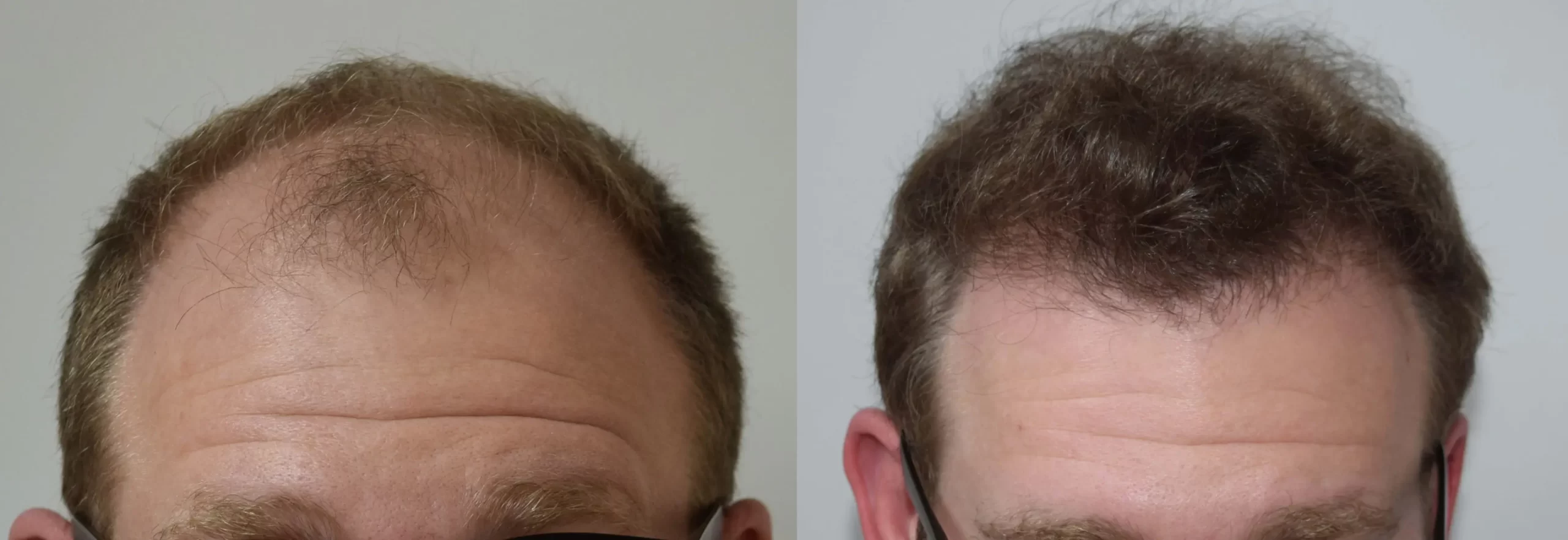
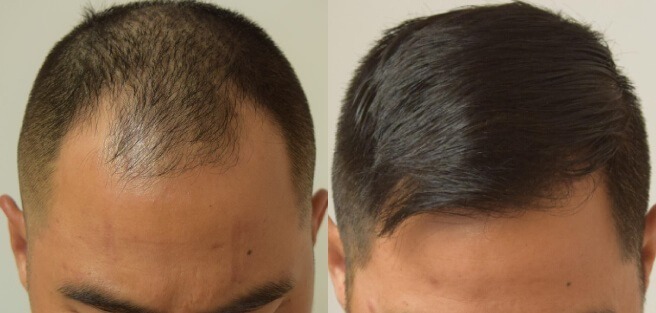
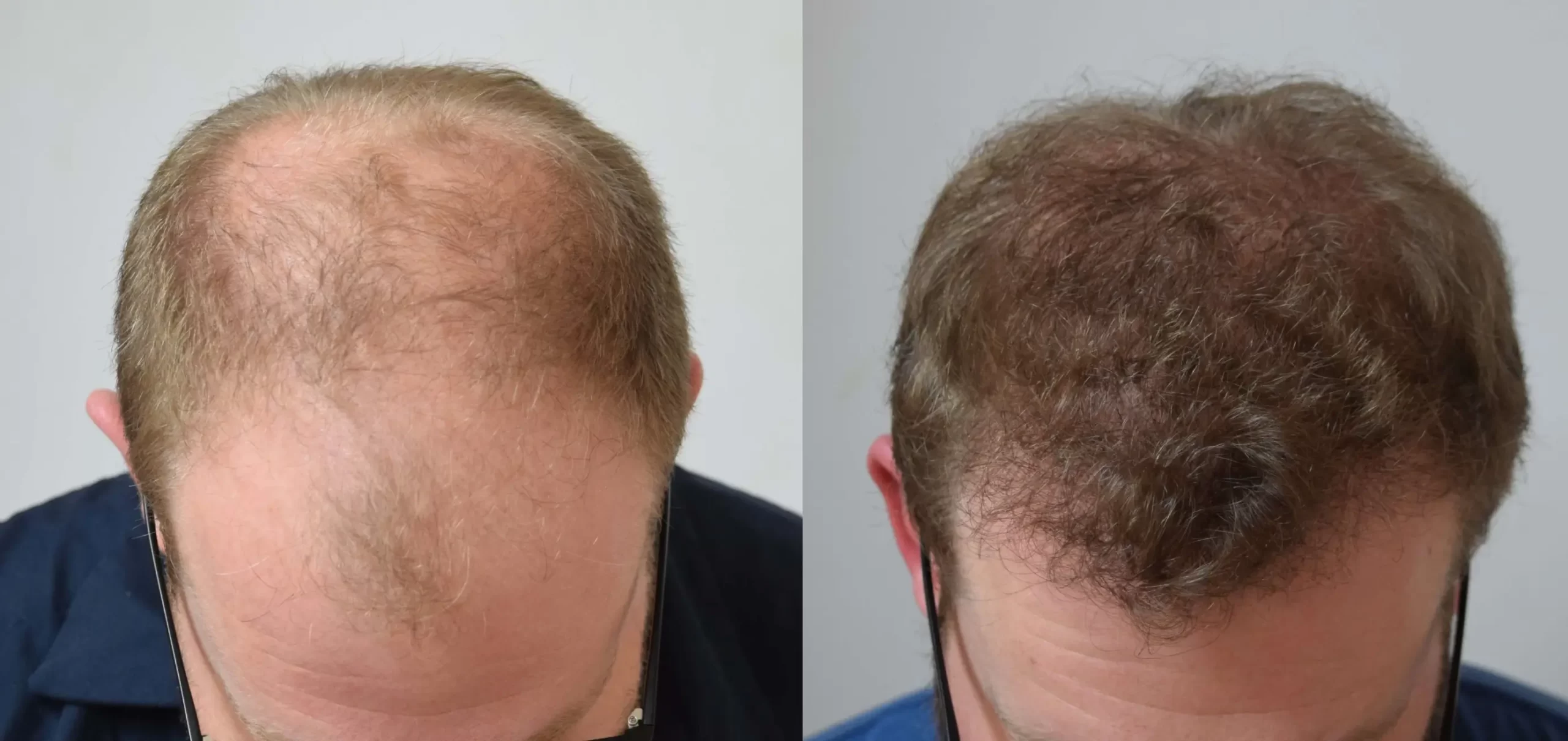
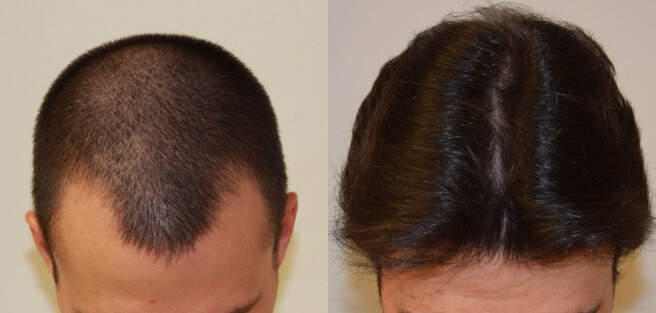
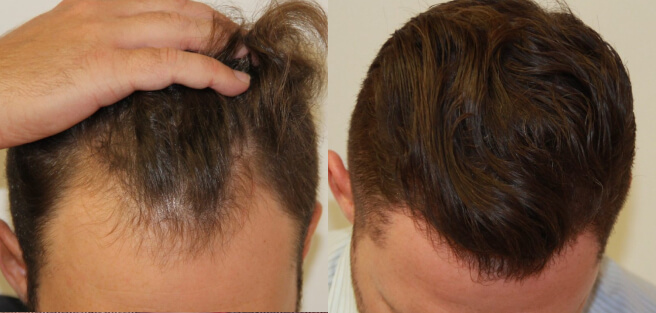
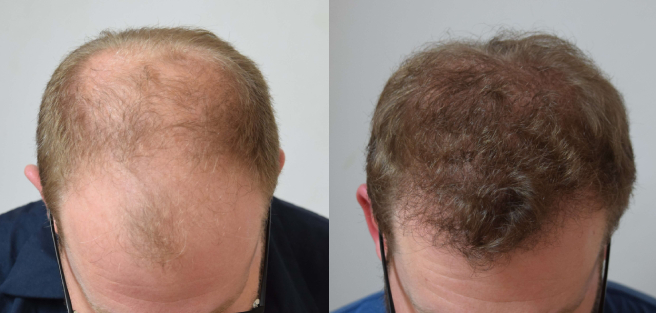
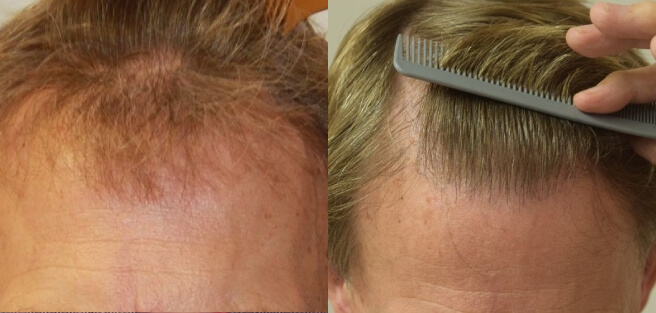
These before-and-after photos show Physician’s Hair Institute patients. Results are individual: they depend on donor supply, hair characteristics, and the surgical plan, and one patient’s outcome does not predict another’s.
Frequently Asked Questions
Which is better, FUT or FUE?
Neither is universally better – it depends on your goals. FUT often yields more grafts in a single session and can cost less for larger cases; FUE leaves less visible scarring and is usually the better choice if you want the option to wear your hair very short. Dr. Keene determines which fits you best during a consultation based on your donor supply and goals.
Does FUE really leave no scars?
No technique is completely scar-free. FUE leaves many small, randomly scattered dot-scars across the donor area instead of one linear scar. They’re much less noticeable than a FUT scar at most hair lengths, but they can still be visible under very short clipper lengths or close inspection.
Which procedure hurts more, FUT or FUE?
Both are performed under local anesthesia, so local anesthesia is used to reduce pain during surgery; individual experiences vary. In the days afterward, FUT donor-site discomfort is usually a bit more noticeable because of the linear incision and sutures, while FUE donor-site soreness tends to be milder and resolves faster.
Can I switch from FUT to FUE (or the reverse) in a future session?
Yes. Many patients who had FUT years ago later choose FUE for a touch-up session, since FUE doesn’t require cutting through the original linear scar tissue. The reverse is also possible in some cases, depending on how much donor area remains. Dr. Keene evaluates this case by case.
Is FUE more expensive than FUT?
Pricing is driven primarily by the number of grafts transplanted, not the technique itself, so there’s no universal rule. FUE is often priced somewhat higher per graft industry-wide because it takes more surgical time, but the total cost comparison depends on your specific graft count.
How long is recovery for each technique?
FUE recovery is typically faster in the first one to two weeks – no sutures, less donor-site discomfort, and a quicker return to light activity. FUT recovery involves more donor-site tenderness for about 7 to 10 days and a longer window (2 to 3 weeks) before resuming strenuous exercise. New hair growth follows the same biological timeline for both: shedding at 2 to 4 weeks, new growth starting around month 3 to 4, and results continuing to mature over the following months; individual timelines vary.
Can FUT and FUE be combined in one procedure?
Yes. For patients who need a large number of grafts, combining both techniques in a single session may increase the number of grafts available while preserving donor-area options. Dr. Keene discusses this approach during consultation for patients with significant donor-supply needs.
Continue Your Research
For additional patient information, see the ISHRS guide to surgical hair restoration and the NHS overview of hair transplantation.
This comparison is educational. A consultation is needed to assess suitability, discuss risks and alternatives, and develop an individual treatment plan.
Explore Both Treatment Options
Review each approach before discussing a personalized plan with Dr. Keene and the clinical team.