
PHYSICIAN’S HAIR INSTITUTE · PATIENT EDUCATION
How to Choose a Hair Transplant Surgeon: 10 Questions to Ask Before You Book
Choose a hair transplant surgeon by confirming who will actually perform each step of your surgery, what training and credentials that person holds, and whether the technique they recommend is based on your hair rather than a default. The ten questions below cover what to ask before you book.
By Dr. Sharon Keene, MD, ABHRS Diplomate, American Board of Surgery Diplomate, and ISHRS Past President.

The 10 Questions at a Glance
Select any question to jump to the full explanation.
Why the Surgeon Matters More Than the Clinic
A hair transplant is a surgical procedure with lasting results, and the quality of those results depends on decisions made by one person: the surgeon who evaluates your hair loss, plans your hairline, and directs the work. Clinics are organized very differently, and in some of them the physician you meet at the consultation is not the person who performs most of the procedure. That is why the most useful questions are not about a clinic’s marketing. They are about who does what, what that person is qualified to do, and whether the plan fits you.
Several of the questions below follow guidance from the International Society of Hair Restoration Surgery (ISHRS), a global nonprofit medical association. We note where. Read the source: ISHRS: Before You Choose a Surgeon.
Part 1: Who Will Operate (Questions 1 to 4)
QUESTION 1
1. Who will evaluate my hair loss, and what is their training?
The evaluation is the foundation of everything that follows, and it should be done by a physician. Ask who will examine your scalp, diagnose the cause of your hair loss, and design your plan, and ask about that person’s education, training, licensure, and experience with hair loss specifically. This matters because not all hair loss is pattern baldness, and some forms are not suited to surgery or need medical treatment first. The ISHRS lists pre-operative evaluation and surgical planning among the tasks that belong to a licensed physician. Source: ISHRS Consumer Advocacy.
QUESTION 2
2. Who will perform my surgery, and what will each team member do?
Ask for a plain description of the surgical team and each person’s role. Trained staff commonly assist in hair transplant surgery, for example by preparing grafts under magnification, and that is not a problem in itself. What matters is which steps the surgeon performs personally. The ISHRS advises that the credentialed surgeon should be the one doing your surgery, and it lists donor harvesting, hairline design, and recipient-site creation among the tasks reserved for a licensed physician. If the answer is vague, or the person you met at the consultation is not the person who will operate, ask to meet the operating surgeon before you book.
QUESTION 3
3. Will anyone who is not a licensed physician make incisions or harvest grafts?
This is the question most patients never think to ask, and it is one of the most important. The ISHRS encourages patients to ask whether anyone not licensed by the state will make incisions or harvest grafts and, if so, what that person’s role is and what the legal basis is. The ISHRS warns that unlicensed technicians performing substantial parts of a surgery can put patients at risk, including missed diagnoses and unnecessary or ill-advised surgery. A clear, confident answer is what you want to hear.
QUESTION 4
4. Is everyone involved in my surgery covered by malpractice insurance?
Ask directly. The ISHRS advises patients to confirm that everyone involved in the surgery is covered, and notes that unlicensed technicians may not be. A reputable practice will answer this without hesitation.
Part 2: Credentials and Experience (Questions 5 and 6)
QUESTION 5
5. What credentials does the surgeon hold, and how can I verify them?
Start with the basics: a current state medical license, which you can check through your state medical board’s public license lookup. Then ask about board certification. Many surgeons are board certified in a general specialty such as general surgery or plastic surgery, which is valuable training but says nothing specific about hair restoration. The American Board of Hair Restoration Surgery (ABHRS) describes itself as the only board certification focused on hair restoration surgery, and states that every Diplomate has shown proficiency in both written and oral examinations. ABHRS maintains a public directory of its certified Diplomates. Membership in a professional society such as the ISHRS shows engagement with the field, but it is not a substitute for board certification.
Verify it yourself: ABHRS · ABHRS public directory of Diplomates.
QUESTION 6
6. Can I see results from this surgeon’s own patients?
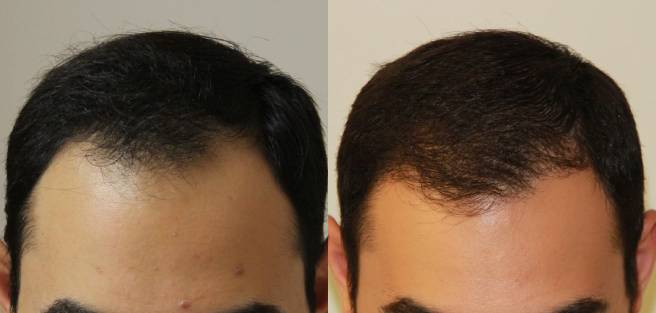
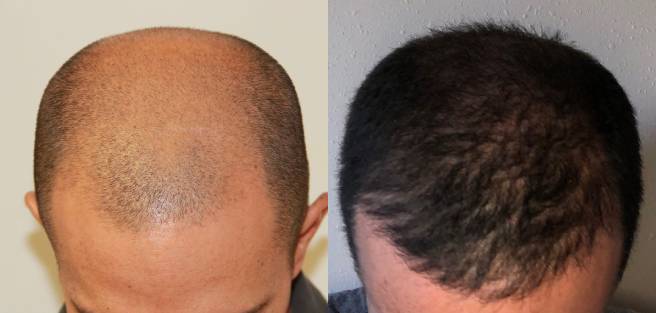
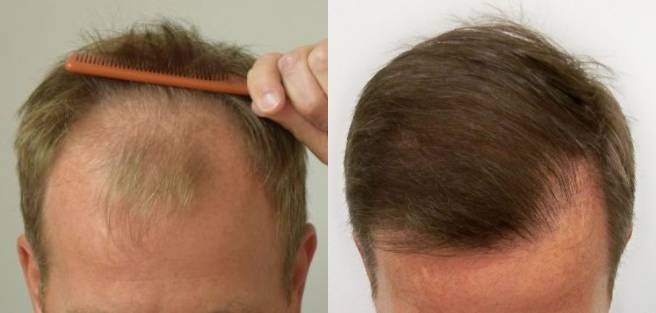
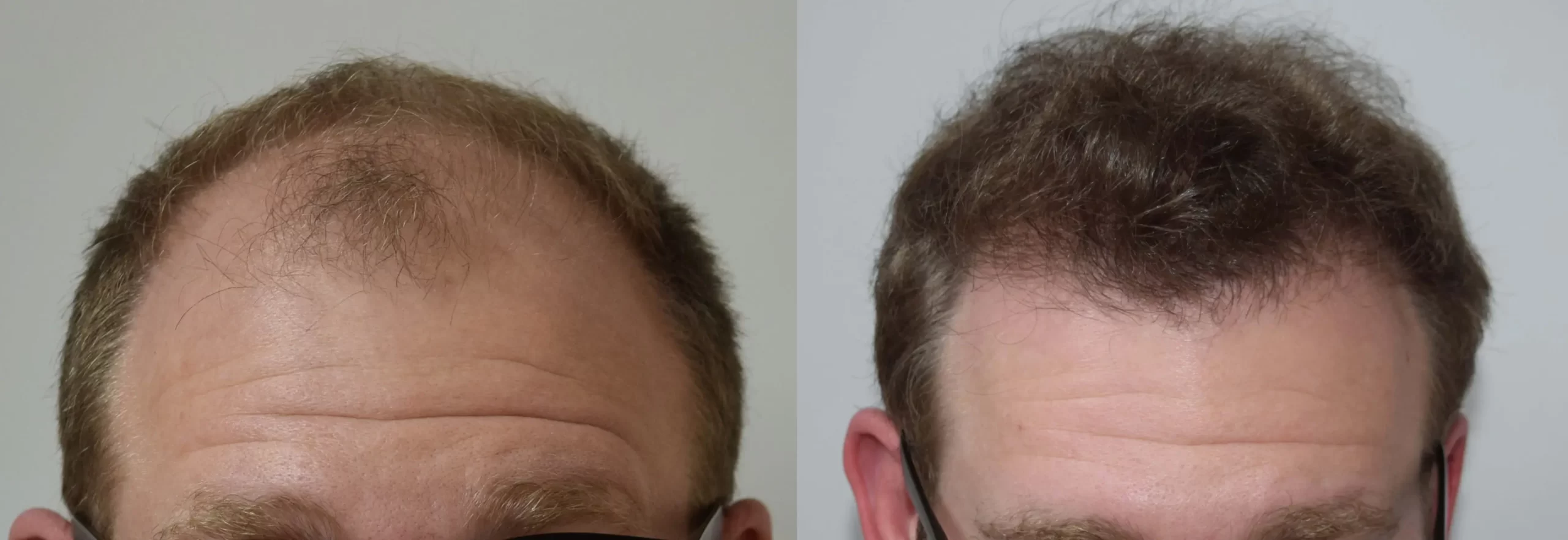
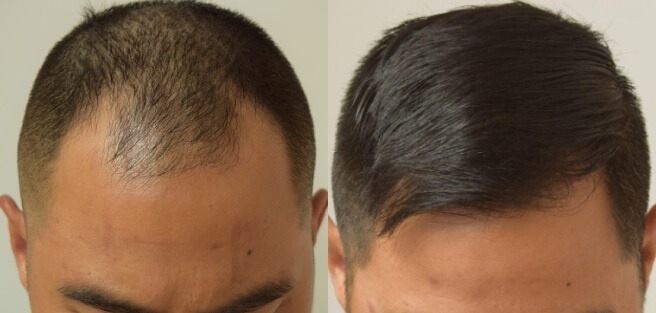
Ask to see before-and-after photos of the surgeon’s own patients, not stock images or photos from another clinic. Look for patients whose hair type, loss pattern, and starting point resemble yours, photographed in consistent lighting and from the same angles. Pay attention to the timeline: a hair transplant takes roughly twelve to eighteen months to show its final result, so photos labeled with the time since surgery tell you more than a single dramatic image. Look closely at the hairline too. A natural hairline is slightly irregular and soft at the edge, not a straight, dense line.
Patient results at Physician’s Hair Institute are available in our results gallery.
Part 3: Your Plan and Technique (Questions 7 and 8)
QUESTION 7
7. Why are you recommending this technique for me?
FUT (strip) and FUE (follicular unit extraction) are both proven techniques, and each suits different patients. A surgeon should be able to explain why one fits your donor supply, the size of the area you are treating, and how you want to wear your hair, rather than recommending the same technique to everyone. Be cautious of anyone who says one technique is simply better, or who says a technique leaves no scars: the ISHRS is direct that both FUT and FUE leave scars. Our FUT vs. FUE comparison walks through the differences in detail.
QUESTION 8
8. How many sessions will I realistically need, and what is the long-term plan?
Ask how long the procedure will take and whether you are likely to need more than one session, which is common. A good plan also looks ahead. Transplanted hair is generally permanent, but the hair around it may continue to thin over time, so the plan should account for how your hair loss is likely to progress and whether medical therapy to protect your existing hair belongs alongside surgery. A surgeon who plans only for today’s hairline, and not for the hair you will have in ten years, is not giving you the full picture.
Part 4: Claims, Results, and Follow-Up (Questions 9 and 10)
QUESTION 9
9. Does the clinic make claims that sound too good to be true?
Hair transplantation has real limits, and a trustworthy clinic describes them plainly. The ISHRS states that there is no such thing as scarless surgery in hair transplantation, and that no machine currently performs all aspects of the procedure: technology can assist a trained surgeon but does not replace one. Treat “scarless” and “fully automated” claims as warning signs. We would add two more: promises of guaranteed results, which no surgeon can make because healing and hair growth vary from patient to patient, and pressure to commit on the spot rather than time to think and ask questions.
QUESTION 10
10. What happens after surgery, and who do I call if something looks wrong?
Recovery questions are easy to skip before surgery and hard to ignore after it. Ask who provides post-operative care (the ISHRS lists it among physician responsibilities), what the follow-up schedule is, and how to reach someone if you have a concern. If you are traveling for surgery, ask how follow-up works at a distance: whether visits can be virtual, when an in-person check is worthwhile, and what to do if something happens after you are home. Patients traveling from the Phoenix area can see how Dr. Keene supports them on our Scottsdale and Phoenix page.
How Physician’s Hair Institute Answers These Questions
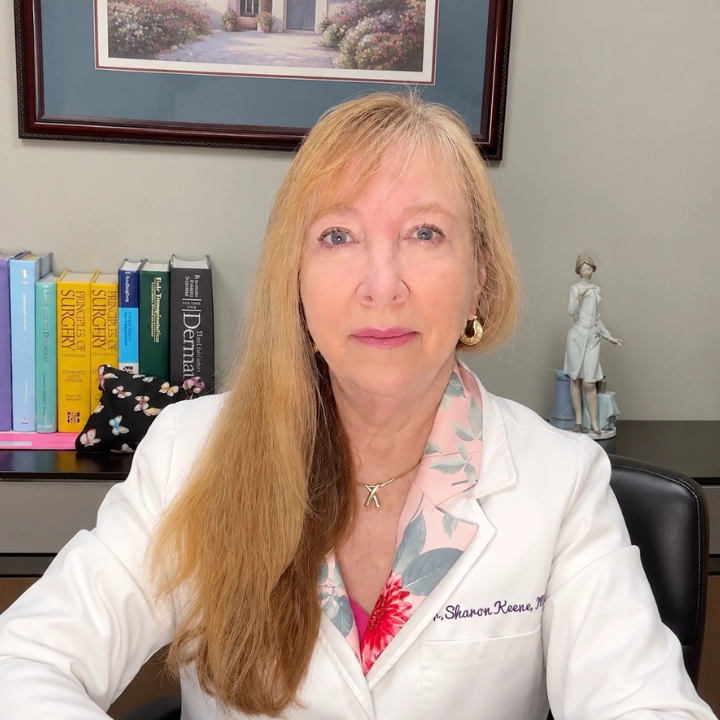
Dr. Sharon Keene, MD, is a female ABHRS Diplomate, American Board of Surgery Diplomate, and ISHRS Past President, with more than 20 years of experience in hair restoration.
Physician’s Hair Institute offers the full range of options, from medical therapy and a combined regenerative protocol to scalp micropigmentation and FUT, FUE, and combination surgery, so a recommendation is never limited to surgery. Consultations are available virtually, so you can ask every question on this list before you plan a trip to Tucson. Patients come from Scottsdale, Phoenix, and across Arizona.
The Bottom Line
The right surgeon is the one who can answer all ten of these questions clearly and without hesitation: who operates, what they are qualified to do, why their plan fits you, and what happens after. Bring this list to every consultation you book, ours included.
Frequently Asked Questions
How do I choose a hair transplant surgeon?
Confirm three things: who will personally perform each step of your surgery, what training and credentials that surgeon holds (a current state license plus board certification, ideally including hair-restoration-specific certification), and why they recommend a particular technique for your hair. Ask to see results from the surgeon’s own patients, and ask what follow-up care looks like. The ten questions above cover each of these.
Does it matter whether the doctor or a technician performs the procedure?
Yes. Trained staff commonly assist, but the ISHRS lists evaluation, surgical planning, donor harvesting, hairline design, and recipient-site creation among the tasks reserved for a licensed physician, and warns that unlicensed technicians performing substantial parts of surgery can put patients at risk. Ask exactly which steps the surgeon performs personally.
What credentials should a hair transplant surgeon have?
At minimum, a current state medical license and board certification in a relevant medical or surgical specialty. Hair-restoration-specific certification is a further signal: the American Board of Hair Restoration Surgery (ABHRS) certifies Diplomates through written and oral examinations. Dr. Keene is an ABHRS Diplomate and an American Board of Surgery Diplomate.
How can I verify a hair transplant surgeon’s credentials?
Check the surgeon’s license through your state medical board’s public lookup, and confirm any board certification with the certifying board. ABHRS maintains a public directory of its certified Diplomates.
Is a “scarless” hair transplant possible?
No. The ISHRS states that there is no such thing as scarless surgery in hair transplantation: any incision beyond the most superficial depth causes scarring, whether it is made by machine or by hand. FUT leaves a single linear scar, and FUE leaves many small dot-scars. Which is less noticeable for you depends on your hair and how you wear it.
What are the red flags when choosing a hair transplant clinic?
The ISHRS specifically warns against claims of “scarless” surgery and claims that a machine can perform the entire procedure. We would add vague answers about who will operate, no clear answer on malpractice coverage for everyone involved, results photos that are not from the surgeon’s own patients, promises of guaranteed results, and pressure to commit at the first visit.
Can I have a consultation before traveling to Tucson?
Yes. Dr. Keene offers virtual consultations, so you can ask these questions and learn whether you are a candidate before planning any travel. Patients come from Scottsdale, Phoenix, and across Arizona.
Sources and Further Reading
This page is educational. A consultation is needed to assess suitability, discuss risks and alternatives, and develop an individual treatment plan.
Bring These Questions to Your Consultation
Schedule a virtual consultation with Dr. Sharon Keene, and bring these questions with you.