
Eyebrow Hair Restoration for a Natural Look
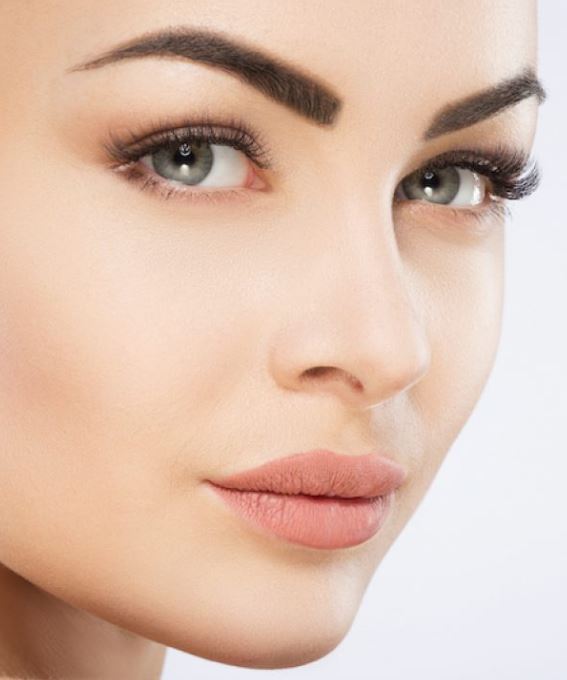
Physician’s Hair Institute in Tucson, Arizona offers surgical eyebrow restoration for patients who have experienced eyebrow hair loss due to over-plucking, alopecia, scarring, thyroid conditions, chemotherapy, or aging. Eyebrow transplant surgery is performed personally by Dr. Sharon Keene, MD, an ABHRS Diplomate, American Board of Surgery Diplomate, and Past President of the International Society of Hair Restoration Surgery (ISHRS).
Dr. Keene uses microsurgical follicle placement to create natural-looking eyebrow results that follow the patient’s existing brow shape, facial anatomy, and natural hair growth direction. Because the transplanted follicles come from the patient’s own scalp donor hair, results are permanent.
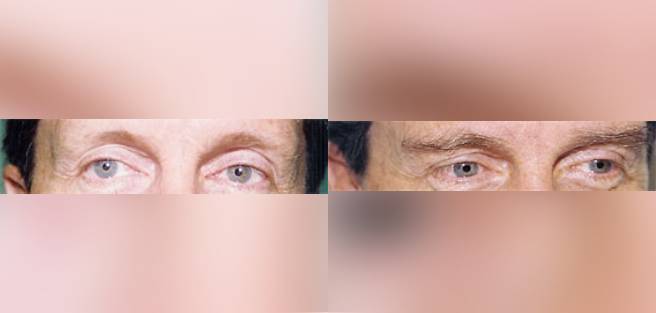
Before and after eyebrow restoration by Dr. Keene. This patient received 225 grafts per eyebrow. Individual results vary.
What Is Eyebrow Restoration?
Eyebrow restoration is a surgical procedure in which individual hair follicles are extracted from a donor area on the scalp and transplanted into the brow region to restore missing or sparse eyebrow hair. The follicles are placed one at a time using microsurgical instruments, allowing Dr. Keene to control the direction, angle, and density of each graft to match the natural growth pattern of the eyebrow.
Unlike tattooed or microbladed eyebrows, transplanted eyebrows grow as real hair. Patients need to trim the transplanted brows periodically, as scalp hair grows faster than natural brow hair. The transplanted follicles are permanent and will continue to grow for the patient’s lifetime.
Common Causes of Eyebrow Hair Loss
Patients who visit PHI for eyebrow restoration have typically experienced brow thinning or loss due to one or more of the following:
- Over-plucking or over-tweezing over many years, which can cause permanent follicle damage and prevent regrowth
- Alopecia areata or other autoimmune conditions that cause patchy or complete brow loss
- Thyroid disorders (both hypothyroid and hyperthyroid) that cause diffuse eyebrow thinning, often most visible at the outer third of the brow
- Chemotherapy or radiation treatment, which can cause temporary or permanent brow loss
- Scarring from injuries, burns, or prior surgical procedures on or near the brow area
- Natural aging and hormonal changes that result in gradual brow thinning
- Trichotillomania (compulsive hair pulling) that has resulted in permanent follicle loss
Dr. Keene evaluates the cause and pattern of brow loss during consultation to determine whether eyebrow transplant surgery is the most appropriate treatment. Some conditions require medical management before surgery is considered.
Why Choose Dr. Keene for Eyebrow Restoration?
Eyebrow restoration requires a level of microsurgical precision that goes beyond standard hair transplant surgery. Each graft must be placed at the correct angle and direction, individually, to replicate the natural growth arc of the eyebrow. Dr. Sharon Keene, MD brings over 20 years of surgical hair restoration experience to every procedure, including eyebrow and facial hair restoration cases.
- ABHRS Diplomate: the specialty credential of the American Board of Hair Restoration Surgery, specific to surgical hair restoration including eyebrow transplant.
- American Board of Surgery Diplomate: dual board credentialing reflecting surgical training and clinical standards of care.
- ISHRS Past President: Dr. Keene served as President of the International Society of Hair Restoration Surgery. Eyebrow and facial hair restoration is covered within ISHRS clinical and educational programming.
- Female surgeon: Dr. Keene is one of the few female hair restoration surgeons in the country. For many women specifically, the ability to discuss eyebrow loss and aesthetic goals with a female physician matters.
- Microsurgical precision: follicles are placed one at a time to match the patient’s natural brow direction and facial anatomy. This is not a volume procedure.
- One procedure per day: Dr. Keene performs one surgical case per day, meaning an eyebrow restoration patient receives her full attention for the entire procedure.
Who Is a Candidate for Eyebrow Restoration?
Good candidates for eyebrow transplant surgery generally:
- Have stable brow loss with a defined area of missing or sparse hair
- Have sufficient donor hair on the scalp or body that can be harvested without creating a visible gap
- Are not currently undergoing chemotherapy or active immune-suppressing treatment
- Have realistic expectations about the appearance of the transplanted brows during the first six to twelve months of growth
- Are in good general health and able to undergo a local anesthetic procedure
Patients with active alopecia areata may not be surgical candidates until the condition is stable, as ongoing autoimmune activity can affect transplanted follicles. Dr. Keene will evaluate this during consultation. Patients who have experienced brow loss due to thyroid conditions should have their thyroid levels stabilized before surgery is scheduled.
Women with eyebrow loss related to female pattern hair loss or hormonal conditions may benefit from non-surgical support alongside or prior to surgery. See our Women's Hair Restoration page for more information.
The Eyebrow Restoration Procedure: What to Expect
Eyebrow restoration at PHI is performed as an outpatient procedure under local anesthesia. Most procedures take two to four hours depending on the number of grafts required.
01 · Consultation
Consultation: Dr. Keene reviews your brow loss history, the cause of loss, your existing brow shape, and your goals for the result. Together, you design the target brow shape before any grafts are placed.
02 · Donor harvest
Donor harvest: a small number of fine hair follicles (typically 50 to 150 grafts) are extracted from the scalp using FUE technique. The donor site is in an inconspicuous area and heals with no visible scar at normal hair length.
03 · Graft preparation
Graft preparation: harvested follicles are prepared under magnification to ensure only the finest, most appropriately calibrated hairs are selected for the brows.
04 · Placement
Placement: each follicle is placed individually into the brow region at the precise angle and direction to match the patient's natural brow growth arc. This step is the most time-intensive and requires the steadiest surgical hand.
05 · Recovery
Recovery: the transplanted area will appear red for a few days. Transplanted hairs will shed at two to six weeks post-procedure, which is normal. New growth begins at three to four months, with the full result visible at twelve to eighteen months.
Because eyebrow hair grows differently from scalp hair, transplanted brows will need occasional trimming after growth is established. Dr. Keene’s team provides full aftercare instructions and is available throughout recovery.
Serving Tucson, Scottsdale, and Patients Across Arizona
Physician’s Hair Institute is located in midtown Tucson and serves patients from across Southern Arizona, including Scottsdale, Phoenix, the Catalina Foothills, Oro Valley, and Marana. For out-of-area patients considering eyebrow restoration, virtual consultations are available as a first step. Visit our Tucson clinic page for hours, directions, and location details, or our Scottsdale Hair Restoration page for information on traveling to our clinic from the Phoenix metro.
Frequently Asked Questions
Can you permanently restore eyebrows?
Yes. Surgical eyebrow transplantation produces permanent results because the transplanted hair follicles come from the patient’s own scalp. The follicles retain the growth characteristics of their origin and continue to grow for the patient’s lifetime. Unlike microblading or tattooing, which fade over time, transplanted eyebrows grow as real hair. They will need periodic trimming, as scalp hair grows at a faster rate than natural eyebrow hair.
Who is the best candidate for an eyebrow transplant?
The best candidates have stable brow loss from a defined cause, such as over-plucking, scarring, alopecia, or aging, and have sufficient scalp donor hair available. Patients whose brow loss is related to an active medical condition (such as uncontrolled thyroid disease or active alopecia areata) are typically advised to stabilize that condition before undergoing surgery. Dr. Keene evaluates each patient individually during consultation.
How many grafts does an eyebrow transplant require?
Most eyebrow transplant procedures require between 50 and 150 grafts per brow, depending on the extent of loss and the desired density and shape. This is a much smaller number than a typical scalp hair transplant, which is why eyebrow restoration is considered a precision procedure. Dr. Keene determines the graft count at consultation based on your existing brow shape, the degree of loss, and your goals.
How long does it take to see eyebrow transplant results?
Transplanted eyebrow hairs will shed at approximately two to six weeks after the procedure, which is a normal part of healing called shock loss. New growth begins at three to four months and continues to thicken through twelve to eighteen months. Most patients see a meaningful change at six months and their full result by twelve to eighteen months. The transplanted hairs grow continuously after this point and will need occasional trimming.
Will the transplanted eyebrows look natural?
Natural-looking results depend on the precision of follicle placement, specifically the angle, direction, and caliber of each graft placed. Dr. Keene places each follicle individually under magnification, following the patient’s existing brow shape and natural growth arc. The goal is a result that looks like your own hair, not a drawn-on appearance. Results also depend on selecting the right donor hairs: fine caliber follicles from the scalp that match the texture of natural brow hair as closely as possible.
Does eyebrow restoration leave a scar?
FUE extraction for eyebrow transplant takes a small number of grafts from an inconspicuous area of the scalp. Individual extraction points heal as tiny circular marks that are undetectable at normal hair length. There is no linear scar. The number of grafts required for an eyebrow procedure (50 to 150 per brow) is small enough that the donor area is rarely visible after healing.
How much does eyebrow restoration cost in Tucson?
Eyebrow restoration pricing depends on the number of grafts required, which is assessed during consultation. Because eyebrow procedures require fewer grafts than full scalp hair transplants, they are typically priced accordingly. Dr. Keene’s team provides a full cost estimate at or before your first appointment. Virtual consultations are available at no charge. To get a personalized estimate, call (520) 290-5555 or book a consultation online.
Is eyebrow transplant surgery available for patients in Scottsdale and Phoenix?
Yes. Physician’s Hair Institute serves patients from Scottsdale, Phoenix, Tempe, Mesa, and across the Phoenix metro for eyebrow restoration. The drive from Scottsdale to our Tucson clinic is approximately 1 hour and 45 minutes. Virtual consultations are the recommended first step for out-of-area patients. Call (520) 290-5555 or use the booking form on this page to get started.
Related Services at Physician's Hair Institute
- FUT Hair Transplant: Dr. Keene's primary scalp hair transplant technique. Highest graft yield for patients with significant scalp hair loss.
- FUE Hair Transplant: Minimally invasive follicle extraction. The same technique used for the eyebrow donor harvest.
- Women's Hair Restoration: Surgical and non-surgical hair and eyebrow restoration for women, led by Dr. Keene as a female hair restoration surgeon.
- Hair Loss Treatments: Overview of all surgical and non-surgical options at PHI.
- Dr. Keene's Credentials: Full background, board certifications, ISHRS presidency, and training history.
If you would like to recontour or rebuild your eyebrows, call our office in Tucson, Arizona today at 290-5555 or call us toll free at 800-840-9761.